What We Talk About When We Talk About Catamounts
By Kate Malmstrom, Program Assistant
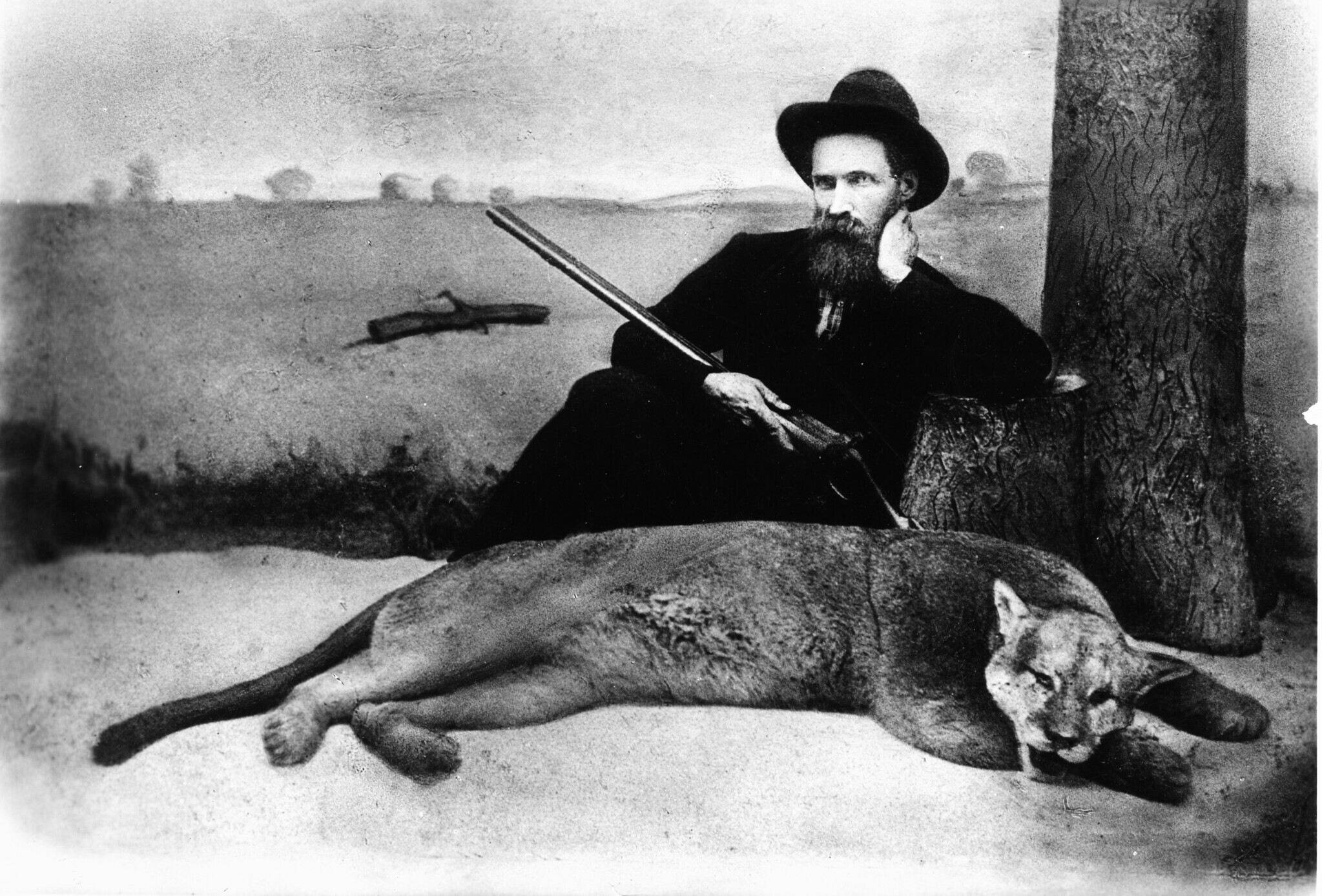
One of the Vermont History Museum’s most iconic objects is a taxidermied catamount, the Barnard Panther. It has commanded the attention of Vermonters young and old since November 1881, when it was tracked down, slain, stuffed, and sent on tour around New England before eventually finding its way to the collection of the Vermont Historical Society in 1960.
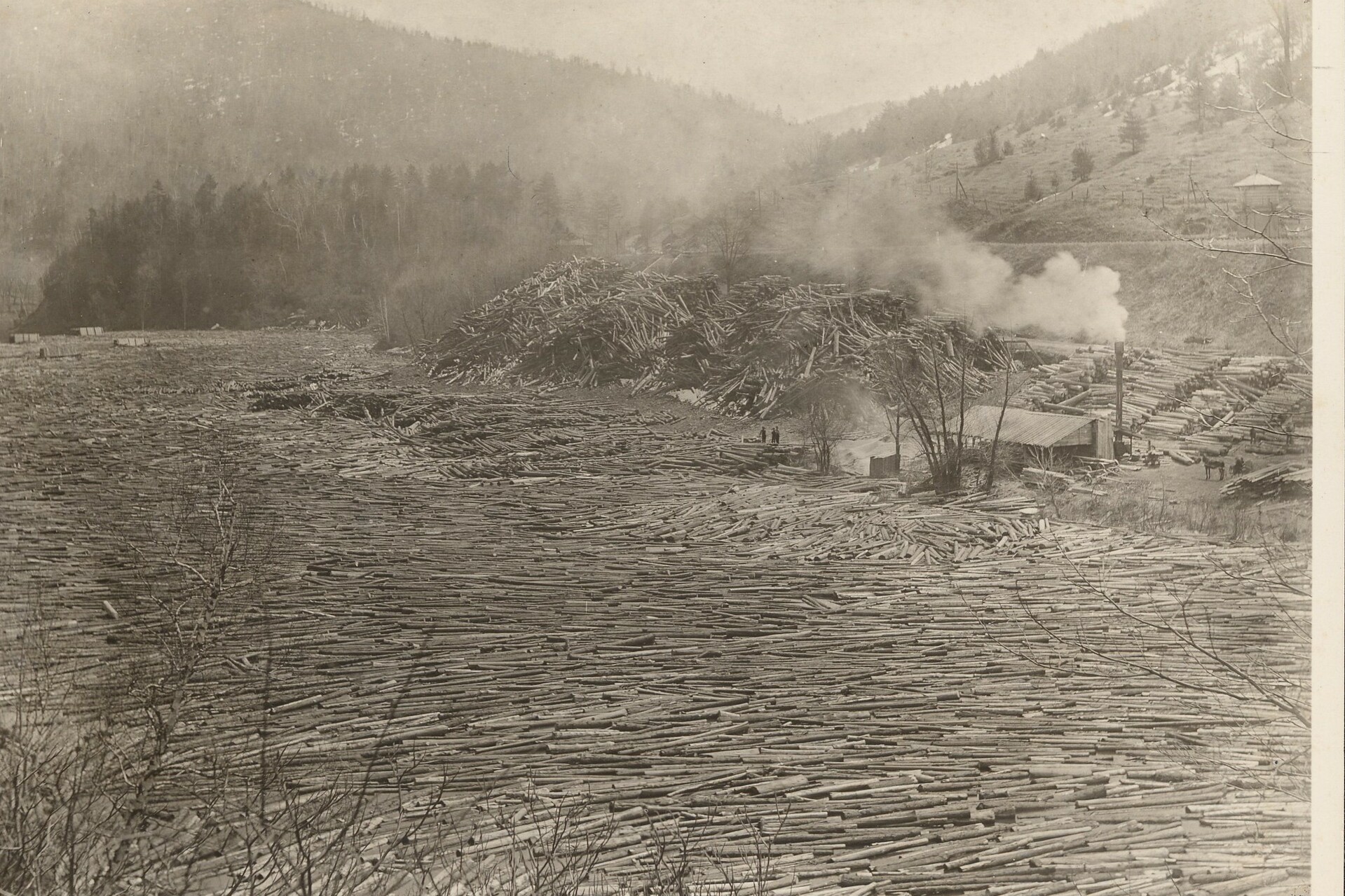
At the time of its death, catamounts were viewed as a great terror and hindrance to Vermonters, a reaction that is tied to the deforestation of the state that brought both populations together, sometimes violently. By the 1870s, catamounts were left with just 20 percent of their original habitat. They often made up for this lost ecosystem by seeking easier prey, pastures of sheep, cows, and other livestock. In response, the State of Vermont offered payment to any hunter who could take down a catamount, leading to the death of one last creature in 1881.
Many Vermonters began to feel regret for this ecological destruction. In 1886, Governor Samuel E. Pingree established the first Arbor Day to advocate for the forestation of Vermont’s hills, while the legislature established a Board of Fish Commissioners the same year to address the unchecked hunting and fishing that was decimating the state’s trout populations. In the near century and a half that’s elapsed since, the state has successfully worked to reforest its land, and has reintroduced beavers, Canada Geese, and wild turkeys to the state’s forests.
Many of the students who visit the Vermont History Museum are familiar with Vermont’s history of conservation and the role that hunting plays in that work, but they have a harder time understanding the rationale of the bounties placed on catamounts by the state. Teaching students about the history of hunting and wildlife conservation prompts them to understand how the public’s attitudes change over time.
Roleplaying is a useful classroom tool that has students put themselves in the shoes of the Vermonters who made these choices. In our History for Homeschoolers class, students participate in a mock Town Meeting Day vote to discuss the past and future of catamounts in our state. We begin with context surrounding a relevant historical incident: the 1881 killing of the catamount. Students examine primary sources and work through a series of open-ended questions to practice critical thinking and multiperspectivity, tools to help them understand the nuance involved in the argument.
.JPG)
Next, we prepare for a mock Town Meeting Day where we will discuss a version of H.473; an act introduced in 2025 relating to the reintroduction of catamounts to the State of Vermont. We ask students to consider the benefits of reintroducing catamounts, who might suffer because of their reintroduction, and what the long-term effects on the environment and local communities could be.
An advanced version of this activity asks students to take on the roles of various stakeholders, including dairy farmers, wildlife biologists, or tourists. Students may be asked to take on an opinion that doesn’t necessarily align with their own, an experience that can help them gain a better understanding of the motivations behind past decisions.
Aided by primary sources, students in these sessions create argumentative zines, which they then use to explain and advance their positions, learning critical analytical and conflict resolution skills. These lessons help students work through complex social dynamics, allowing them to be critically engaged and involved in the decision-making process.
Ultimately, we hope that students leave the classroom knowing more about the answers to why and are inspired to ask more questions about how; “How might my decisions today impact the future of the State of Vermont? How do we learn more? And how can we continue to make a difference?”
This article appeared in the Spring 2026 issue of our member magazine, History Connections. To get it and to support our work, you can sign up as a member here.