Looking back on two years of Activating Local History
By Hannah Kirkpatrick, Program Coordinator
We are almost done with our final year of the Activating 21st Century Local History Training Program. It’s been a great two years full of learning and collaboration. As my work with the project concludes, I wanted to share some of my own experiences and learning opportunities.
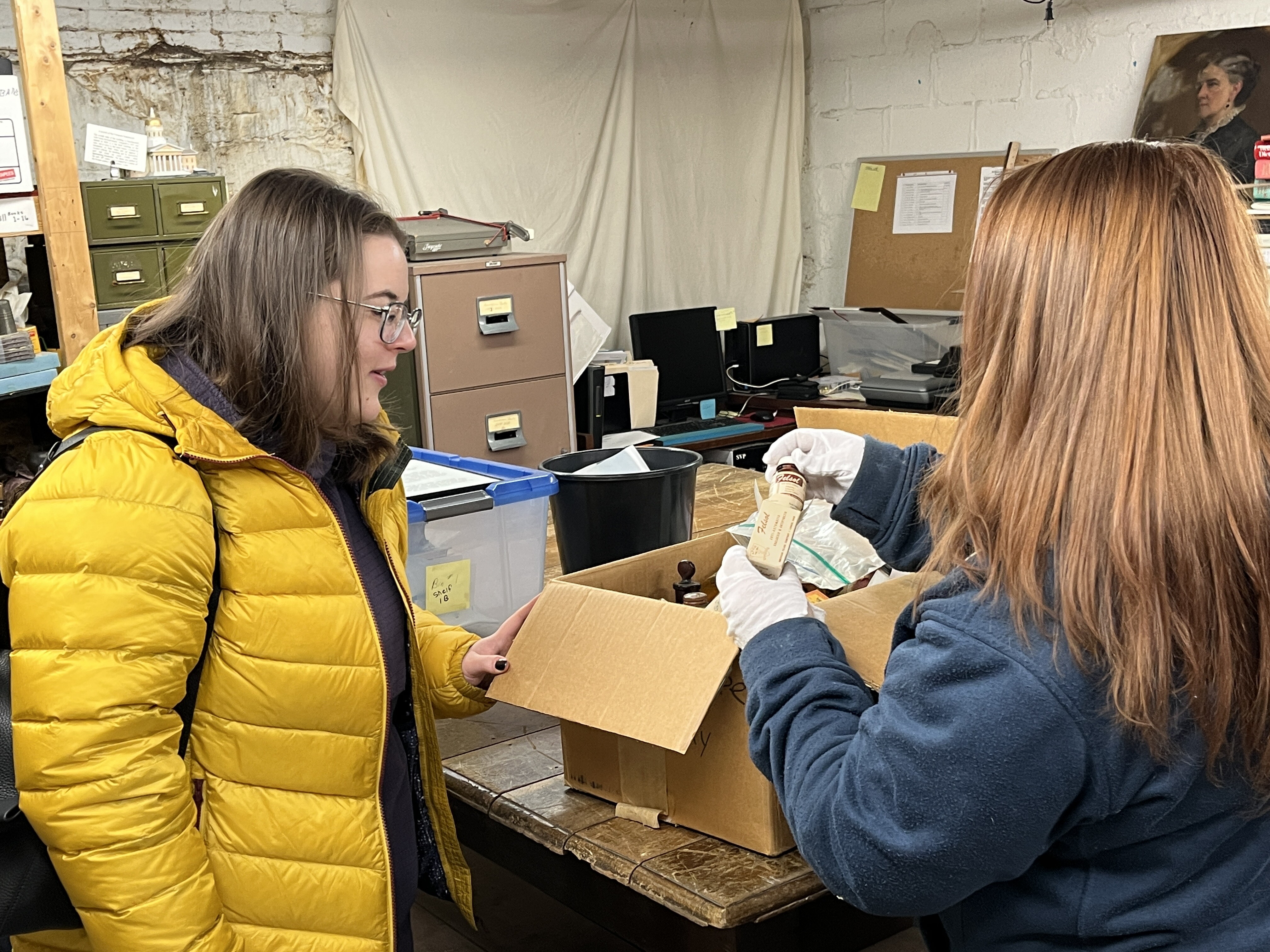
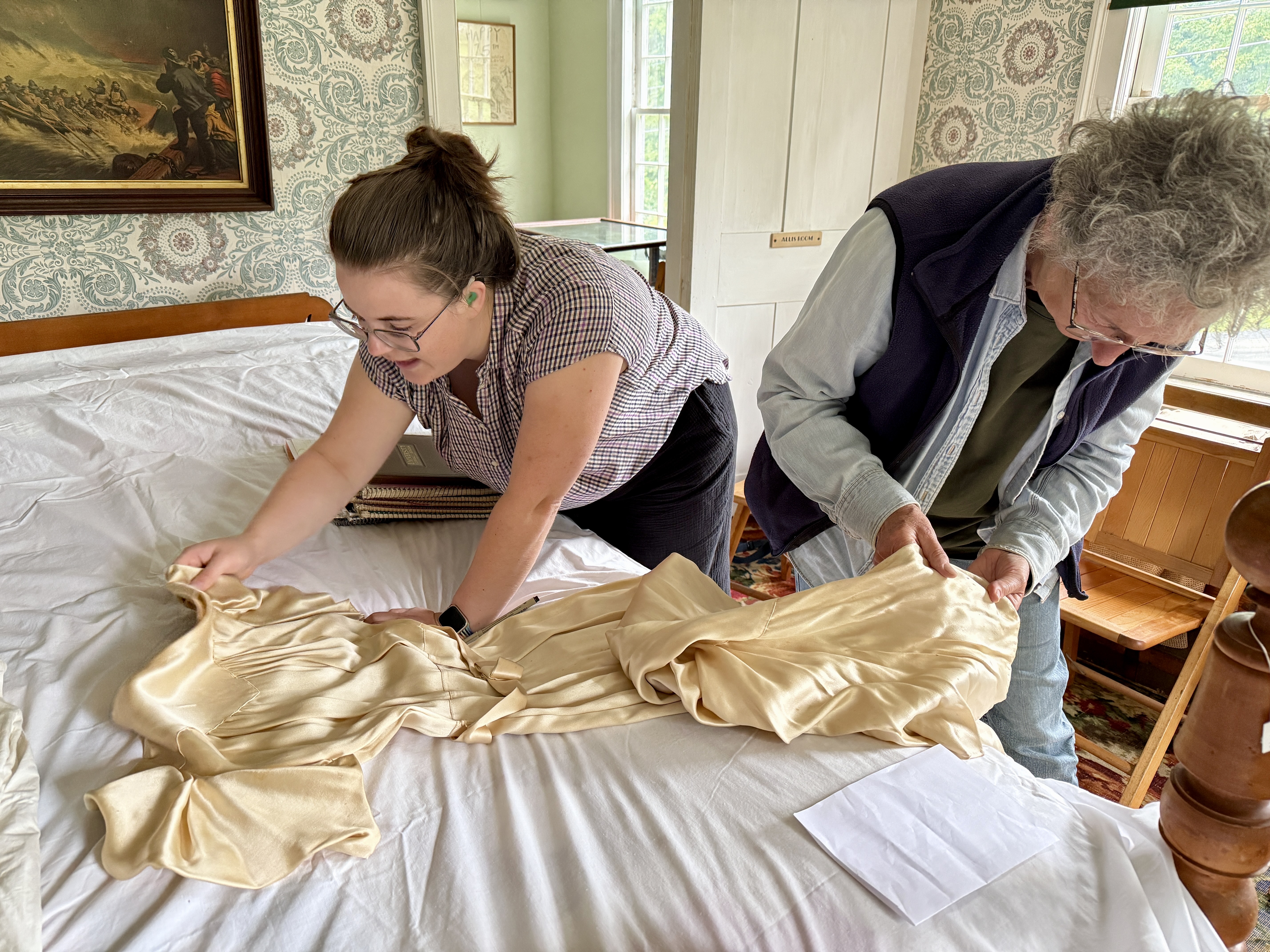
First of all, this was an amazing experience! I am so grateful to have had this opportunity to learn so much about local history collections in Vermont. Some of my favorite days on the job were spent on site, digging through boxes in a closet or basement with the steadfast volunteers at the core of our cohorts. From petticoats to medicine to fine art, I’ve seen it all! It is so special to handle objects that have been cherished by not just their original makers and owners, but by a chain of people since then. Throughout the two-year project period, we spent 375 hours on-site with cohort members across 79 unique work days on Active Collections projects.
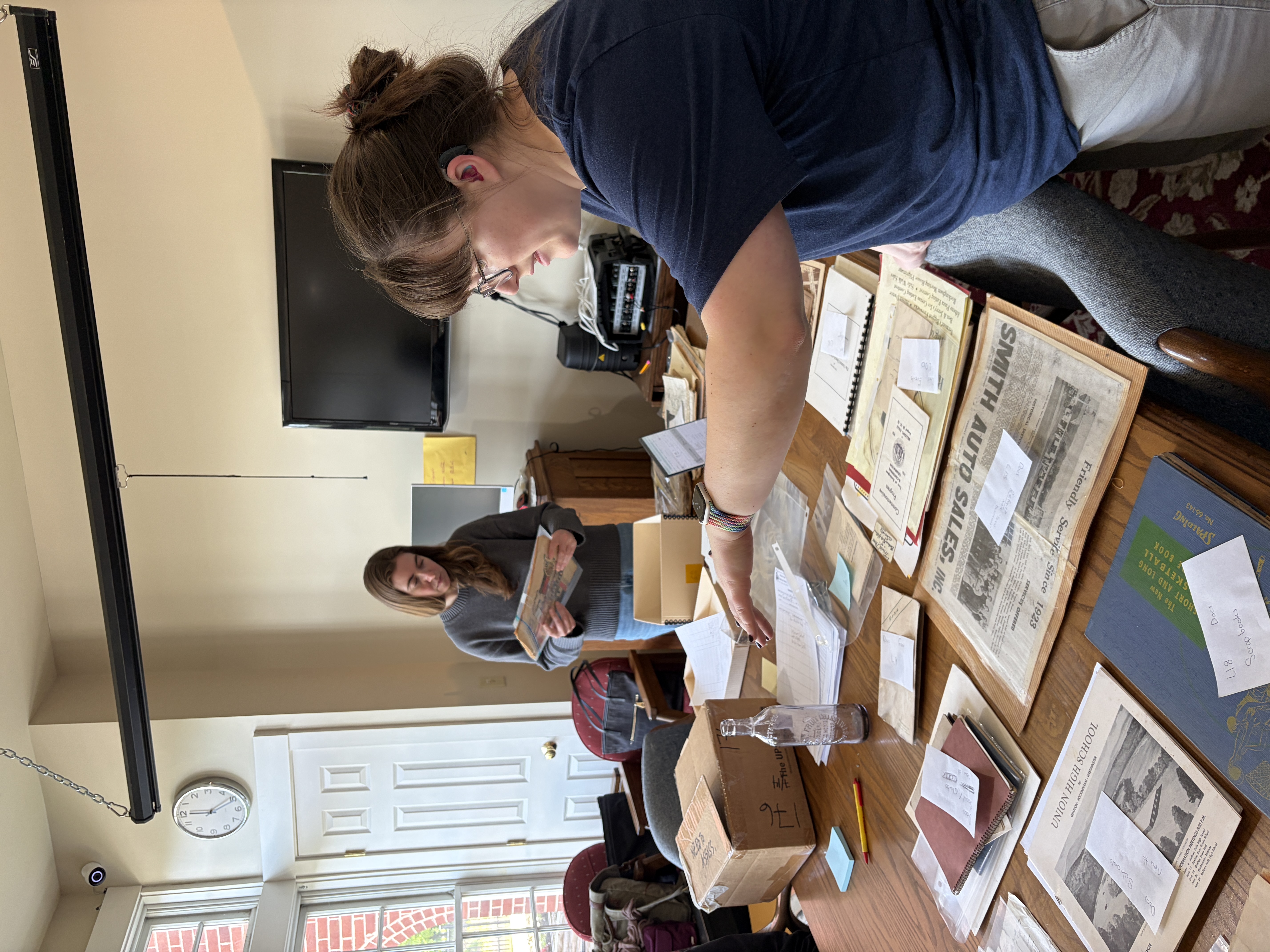
When I started with the project in October of 2024, I had some experience as an intern in history, art, and research collections, but I also came in with a lot to learn. The members of our project advisory committee and the collections team at VHS were all a huge help in supporting my training in collections care. At the same time, I found that being unencumbered by rigid interpretations of collection care standards was a boon to my understanding of Active Collections. With the current state of funding for museums and archives, being able to budget our time and resources wisely is essential.
I found that having recently learned a lot about collections care, I was able to relate to local history volunteers easily and have open discussions about what their organizations could afford to do for their collections in the long term. A sustainable collection is not too large for the storage space, is not deteriorating in a harmful way, and above all, is relevant to the mission. One of the most valuable offerings of this program turned out to be that direct, hands-on approach, where we were able to listen to our cohort members’ stories and help problem solve.
I’ve visited all corners of Vermont and met so many wonderful people in the past two years. I’m so proud of where this program has gone, especially against the odds when we lost our funding in spring of 2025. The fact that this program continued through that moment is a testament to all Vermonters’ passion for history and meaningful connection at the local level. Thank you to our donors, our cohort members and advisory committee, and everyone at the Vermont Historical Society for making this more than just a job for me.
Further reading