
50 for 250: the culmination of years of Active Collections work at the Vermont Historical Society
By Hannah Kirkpatrick
March 26, 2026
Active Collections work at VHS started around 2018. We established a grading system based on the concept of tiering and began a systematic assessment of our entire collection. Over 30,000 objects have been graded since then. We knew we had far too many objects, so the grading system became essential for making informed decisions on deaccessioning. The vast majority of proposed deaccessions have received a grade of “D” or “F”, meaning they have no Vermont connection, are in extremely poor condition, have no paperwork or provenance, or any combination of those factors.
But what about the other end of the grading scale? Some objects are so exceptionally “Vermont” that they set the curve for the rest of the collection. This is how we came to the 50 for 250 project at VHS. 50 for 250 is a multi-faceted project celebrating Vermont’s 250th anniversary through the stories told by 50 carefully selected objects in our collection. These objects span the entirety of Vermont’s story and vary in type and origin. One thing that they have in common, though, is that they have received high marks in our Active Collections grading system. 38 of the objects included in the project have received a grade of “A”, 12 a grade of “B”, and just 2 have received a grade of "C”.
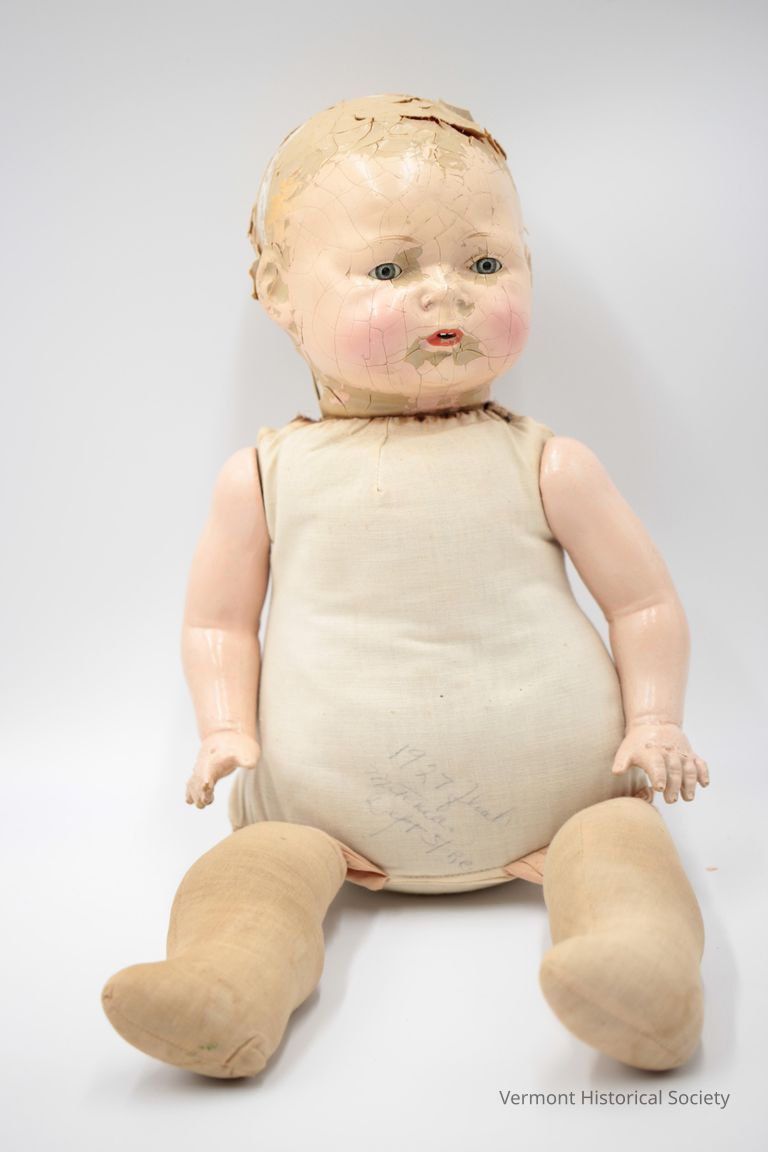
It’s important to fully assess each object on its own and to keep careful records of the stories each object came with. For example, the baby doll included in 50 for 250 received a “C” grade. Why might this object have a less than perfect score, but still beat out hundreds of other “A” graded objects to be included in 50 for 250? Our grading system is heavily weighted in favor of objects with a Vermont connection, but other factors like condition can impact the score.
In the case of the doll, its poor condition is due to the very story that makes it a special part of Vermont’s history. This doll was in the basement of a department store in downtown Montpelier during the 1927 flood, generally considered the worst natural disaster in the state’s history, with the list of dead totaling 84 across the state and property damage over $500 million in today’s dollars. Flaking paint, mold, and loose parts are all potential condition issues that could result from water damage like that which this doll experienced. Condition issues like this must be factored into how we plan for the long-term health of an object. A doll with water damage will require more resources (time, money, and storage materials) than a doll from the same era that has no water damage, so “C” is a generous grade based on condition. However, its story and visceral representation of how Montpelier residents and businesses were affected by the 1927 flood make it well worth the effort and resources to preserve this doll for as long as we can.
Small museums and local historical societies beginning to work with Active Collections often face an overwhelming and daunting task of tiering and reorganizing their entire collection. When you’re just getting started with this task, it can be hard to imagine what your collection will actually look like 5 years down the road. 50 for 250 is a great example of why Active Collections work is worthwhile: it’s much easier to narrow down our 927 “A” objects and some standout "B" and "C" objects into a select 50 than it is to choose from the entire collection of 30,000+ objects.