Photographing 50 for 250
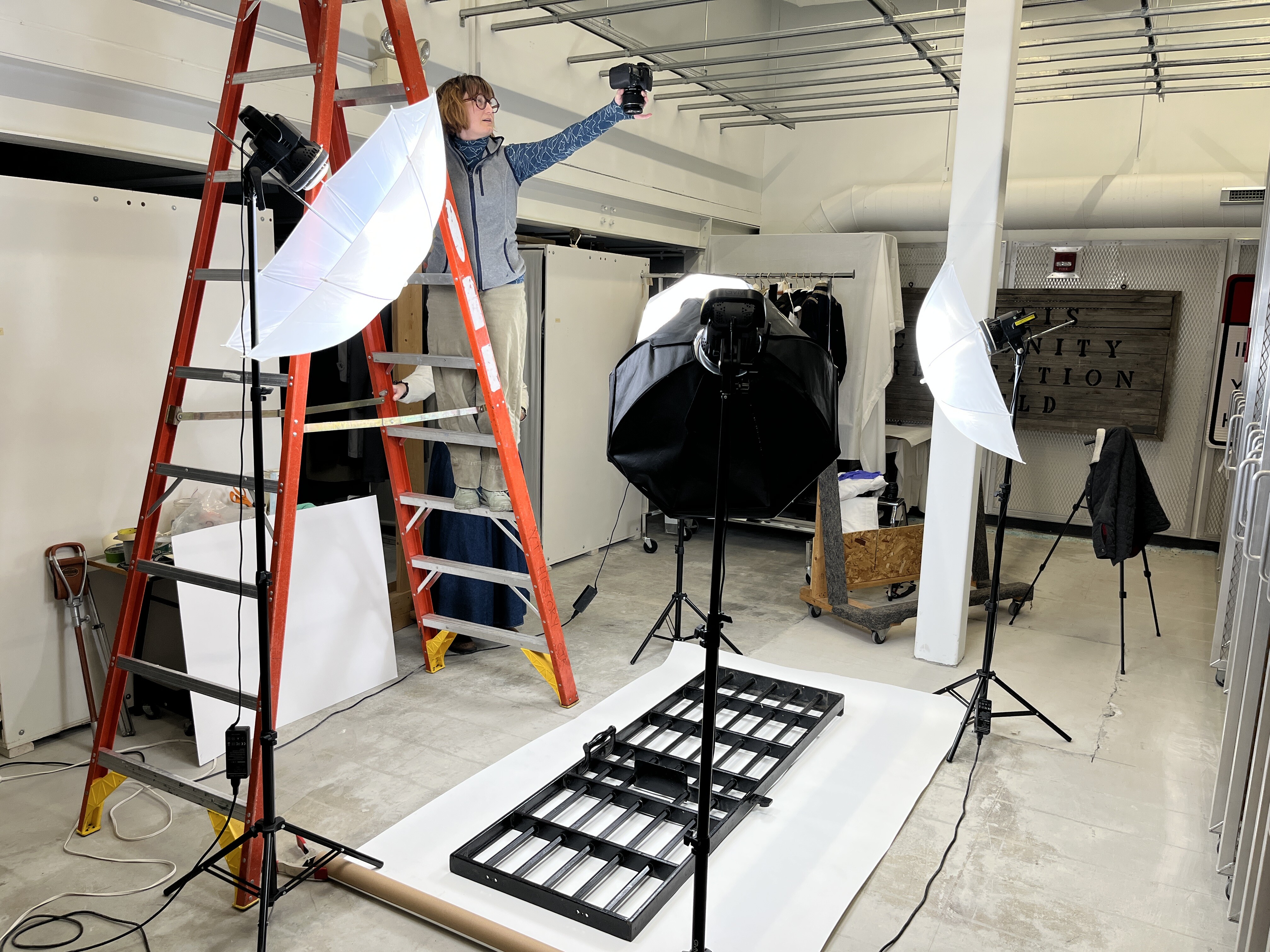
As the Vermont Historical Society works hard on our forthcoming book featuring 50 items from our collections, one major task has taken up hundreds of hours of time in the collections department: producing new photographs that will be included in the book.
The core idea behind the 50 for 250 project is to select 50 items from throughout Vermont's history for intense study. Each item will get an essay written by an invited scholar, and each of those essays will be accompanied by additional material – anywhere from six to eight additional selections that further elaborate on the stories the central object. While we’re still making some final decisions, it looks like we’ll have nearly 350 images in the book – far more than the project's main collection of objects by several orders of magnitude.
For each essay, we’ve researched and proposed as many as ten to twelve possible illustrations to authors, and then worked with them to winnow down those suggestions to a final six to eight. We’ve worked to balance the choices between our object and archival collections, and have taken a big picture look at the themes in the essay – so illustrations might range far beyond the time period of the central item itself.
Once we confirmed an object's inclusion in the project, it had to be photographed or scanned. Scanning can be as simple as using one of the Leahy Library’s flatbed scanners – or it can be as complicated as requiring two to three staff members carefully balancing a large poster to run through a large format scanner. Every image needs to be double-checked, appropriately named, filed, edited slightly (rotated as little as a quarter of a degree to be perfect, scanning field detritus cropped off, etc.), and then placed in the proper section of the book.
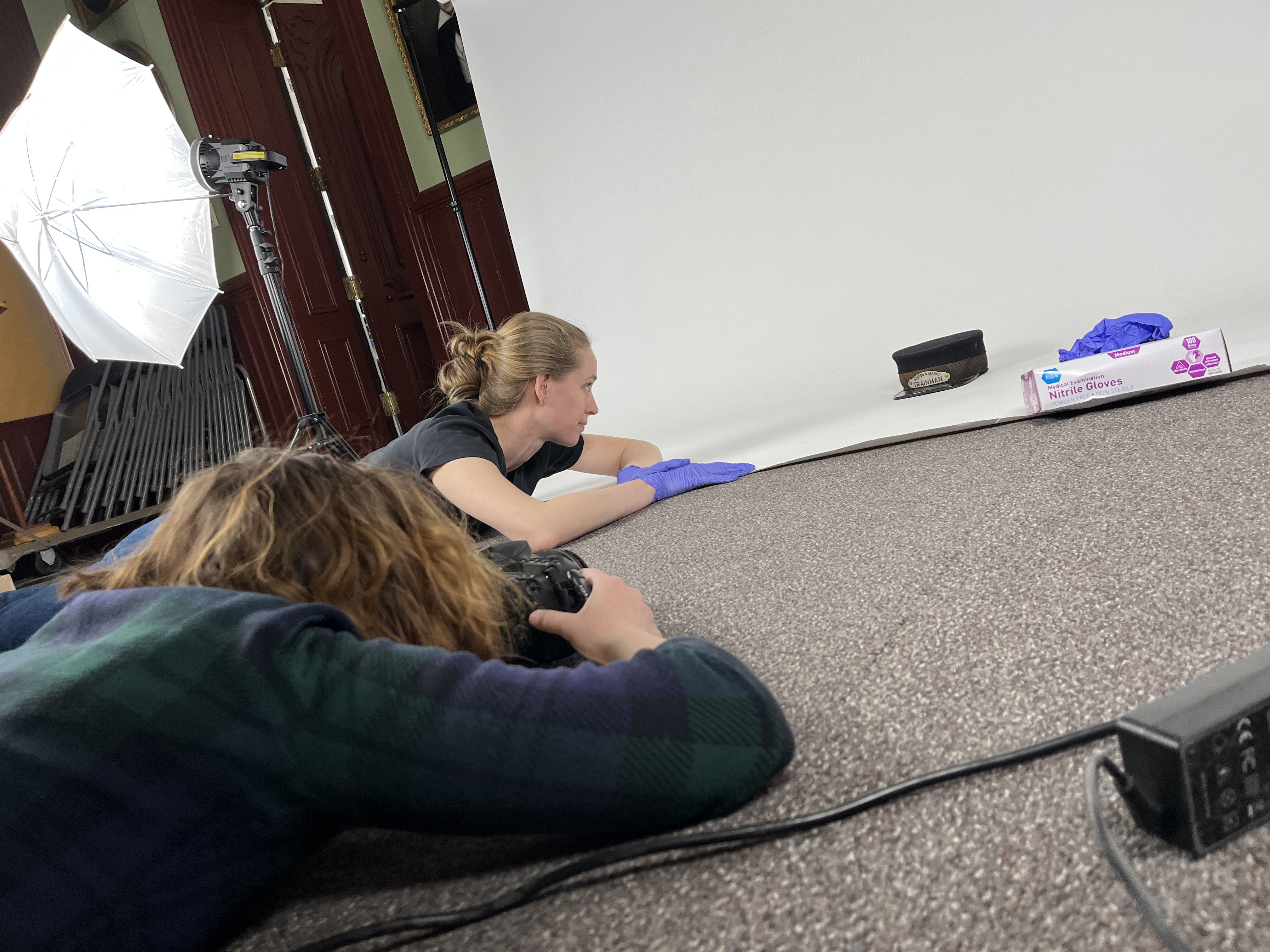
Photography is an even more complicated proposition. For that work, we contracted with two additional, local professionals. Teresa Greene and Shannon Alexander. Depending on timing and type of photograph, each spent dozens of hours with us in the past weeks, taking as many as twenty photographs of a single object. They then edited the final file, selected the small handful of “keepers”, and cleaned up any stray background artifacts.
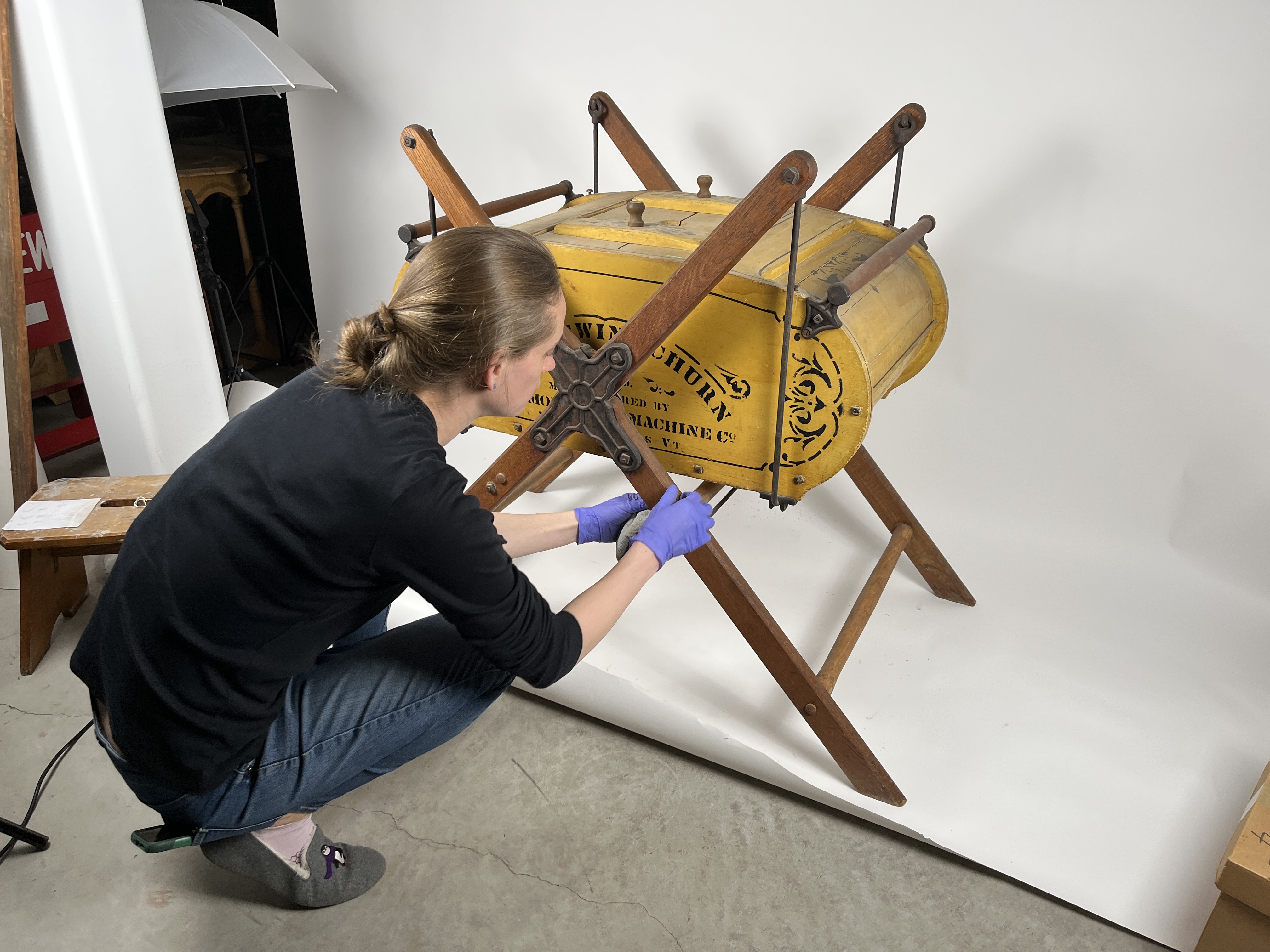
Preparing an object for photography is also time-consuming. Working with volunteers and interns, Collections Manager Katie Grant pulled, cleaned, assessed, prepared, and then supervised dozens of these objects. The largest took as much as an hour just to get into place against the backdrop, while the smallest presented their own problems – a button the size of a thumbnail that had intricate detail took painstaking care with lighting and angle to get just right.
The final result is extraordinary. Objects that we know are beautiful, complex, and fascinating are shown in their best light, their impact now much more accessible to everyone. Unfortunately for us, it’s making us wish we could put every single object in our collection through this process – but at nearly 30,000 objects and an average of an 60-90 minutes per item to fully photograph, that’s as much as 45,000 hours, or twenty years of full time work.
In the meantime, we update our photography in big pushes like this one, and in everyday work like our ongoing, years-long inventory project. For most purposes, simple documentary photography works just fine, and we’ll go back to the everyday soon. We’ve loved the chance to get much more invested in this aspect of the work over recent weeks, and we’re excited to share these stunning new images of these beloved items with you soon.