The Largest Item in our collection
By Emily Lev, Director of Stewardship & Public Relations
With nearly 30,000 items stored in the basement of the Vermont History Center, it might be challenging to determine what is the largest item in our collection. Jennifer Blair, Director of Finance and Operations, says it’s quite simple. The largest item? It’s the Vermont History Center itself.
“It’s a historic building,” Blair explains. “It’s a Lambert Packard building, designed by the same architect who designed Fairbanks Museum. It’s a beautiful structure and we are responsible for maintaining it; it’s also a big and complex building.”
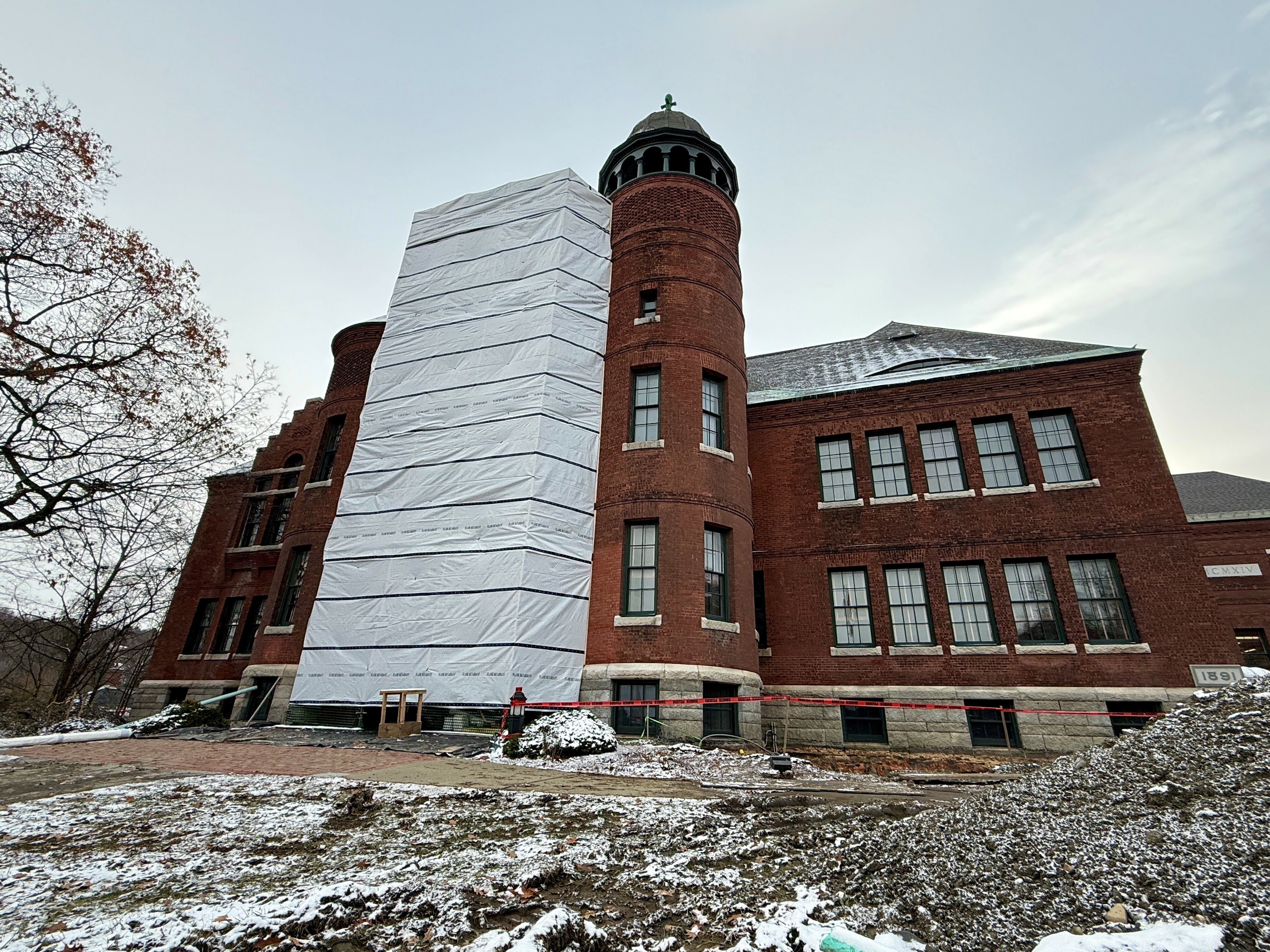
One complexity is that the enormous structure is granite and brick. “Those are materials that require special treatment to be maintained,” Blair says. “They will deteriorate in the wrong conditions, and some of those conditions are water and salt.” In the winter, salt gets on the steps from the parking area, and in the summer, increased heavy downfalls erode the mortar holding the brick and stone together. The interior also presents challenges. “We are trying to maintain the historic interior of the building in the historic building,” Blair explains, noting that a building this significant requires extra attention whenever any work is done.
When VHS purchased and restored the building a quarter century ago, workers took great care to preserve the beauty of the original structure. “I think it is interesting that they had the foresight to retain some of the original materials from the renovation of the building,” says Blair. “Now, when we are working on the exterior renovation, we have original bricks that will be used to replace damaged bricks. When we repaired the floors in the lobby, we had original floorboards we could use.”
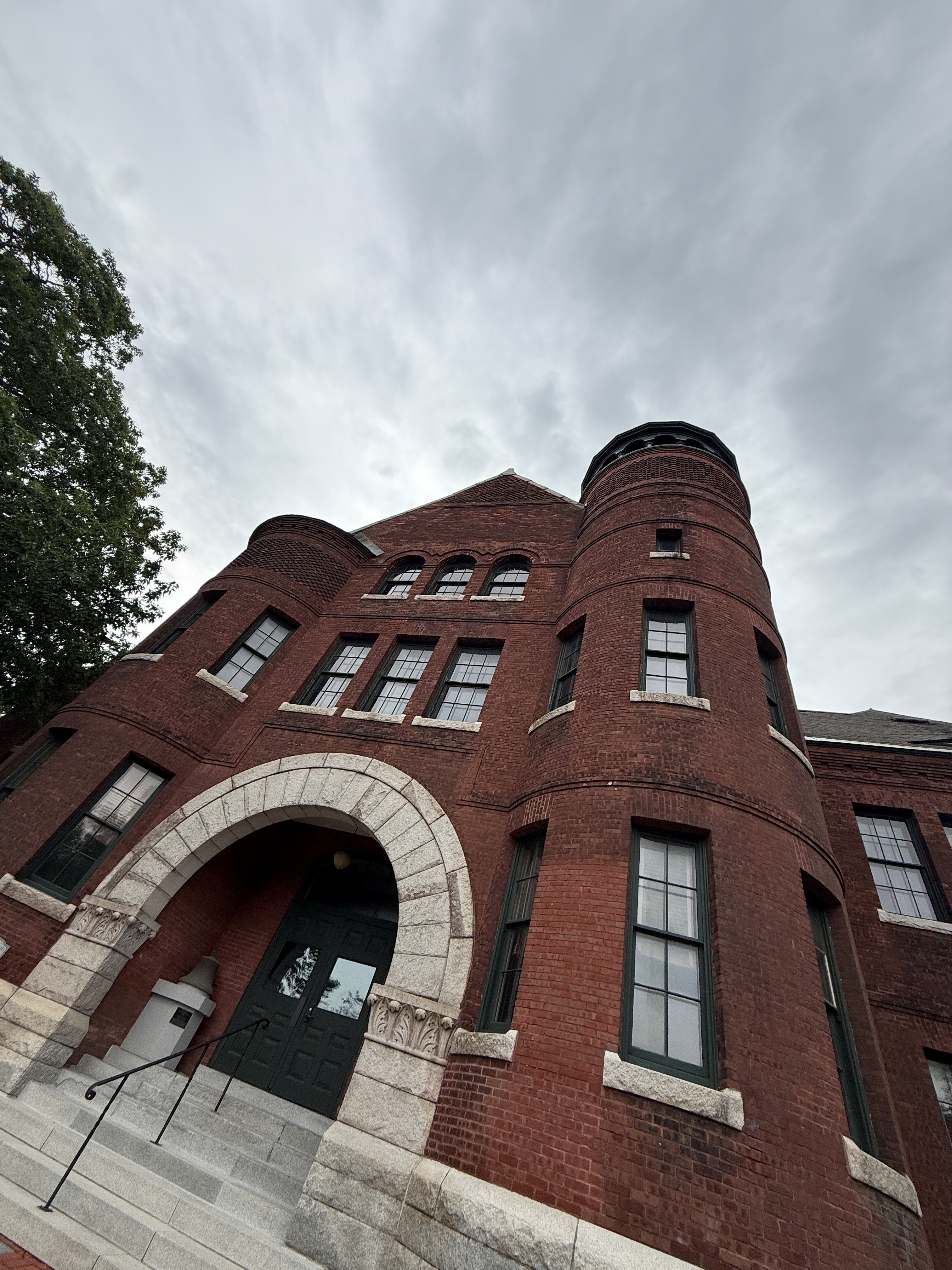
Blair, like many of the building’s visitors, is drawn to the grace of the Vermont History Center. “It is a beautiful space to be working in. I love the pressed tin ceilings and the big open spaces. It is a warm and inviting space to be in.” She also recognizes the responsibility that beauty carries with it. “The Preservation Trust of Vermont holds an easement on the building, and they need to approve any work that we do on the exterior or any major changes to the interior to ensure that we are maintaining the historic character of the building.”
“My biggest concern about the building is long-term maintenance required for a historic building,” she continues. “We invested a lot of money into the initial renovations,” but the building needs significant upkeep. The VHS is reliant on the state’s Capital Fund process for upkeep support, and we have been bound to try to keep to the state’s guidelines for budgeting, which are very small increases. That poses a challenge because “we are now at 25 years since the renovation and that is the typical lifespan of a lot of components of a building.” All of the building’s major systems, including the critical HVAC components, are in need of upgrade, in addition to all of the needs for the exterior.
Further reading: A Watertight Seal
“So, we are in a bit of a pickle.” We already raise a significant portion of our annual budget through fundraising, and there isn’t much room to increase that capacity. VHS is applying to get on the Regional Priority Project list, which would open up some additional funding opportunities, but that is far from a guarantee. Without increased support from the state’s Capital Fund, keeping up with normal wear and tear on a large historic building is incredibly challenging.
Blair, however, remains committed to caring for this, the largest item in our collection.
This article was originally published in the Fall/Winter 2025 issue of our member magazine, History Connections. To get it and to support our work, you can sign up as a member here.