Spaulding: The People, The Place, The Things
By Katie Grant, Collections Manager
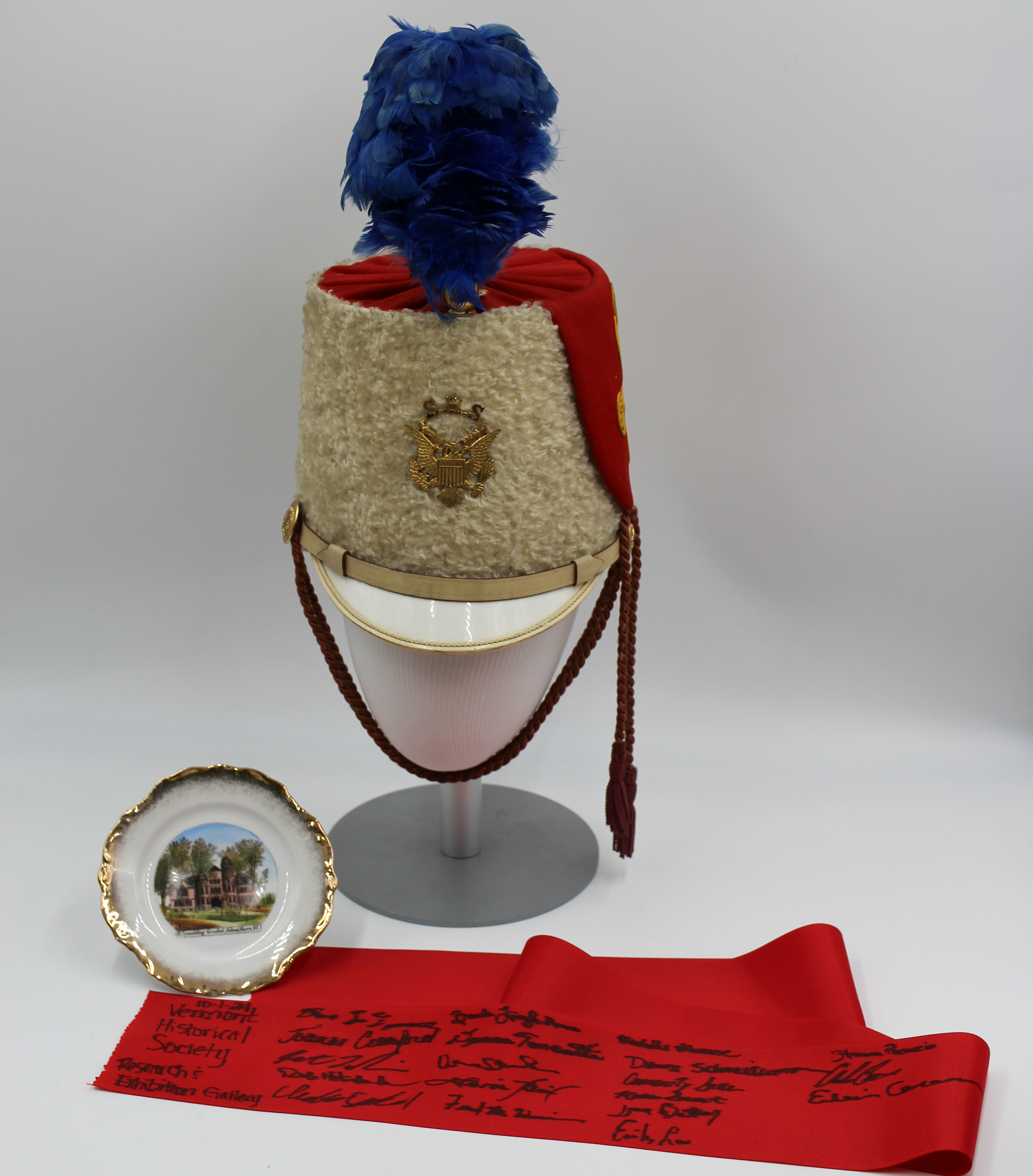
What does a porcelain saucer from the 1920s, a drum major’s shako from the 1940s, and a signed ribbon fragment from 2025 have in common? These three objects all tell an important story about the Vermont History Center and its occupants.
The Spaulding Graded School was built to shelter and inspire learning at all levels in 1891. Also known as the old high school, this structure remains standing to help protect and share the stories of students and teachers who worked and studied here alongside a broader history of Vermonters across the state.
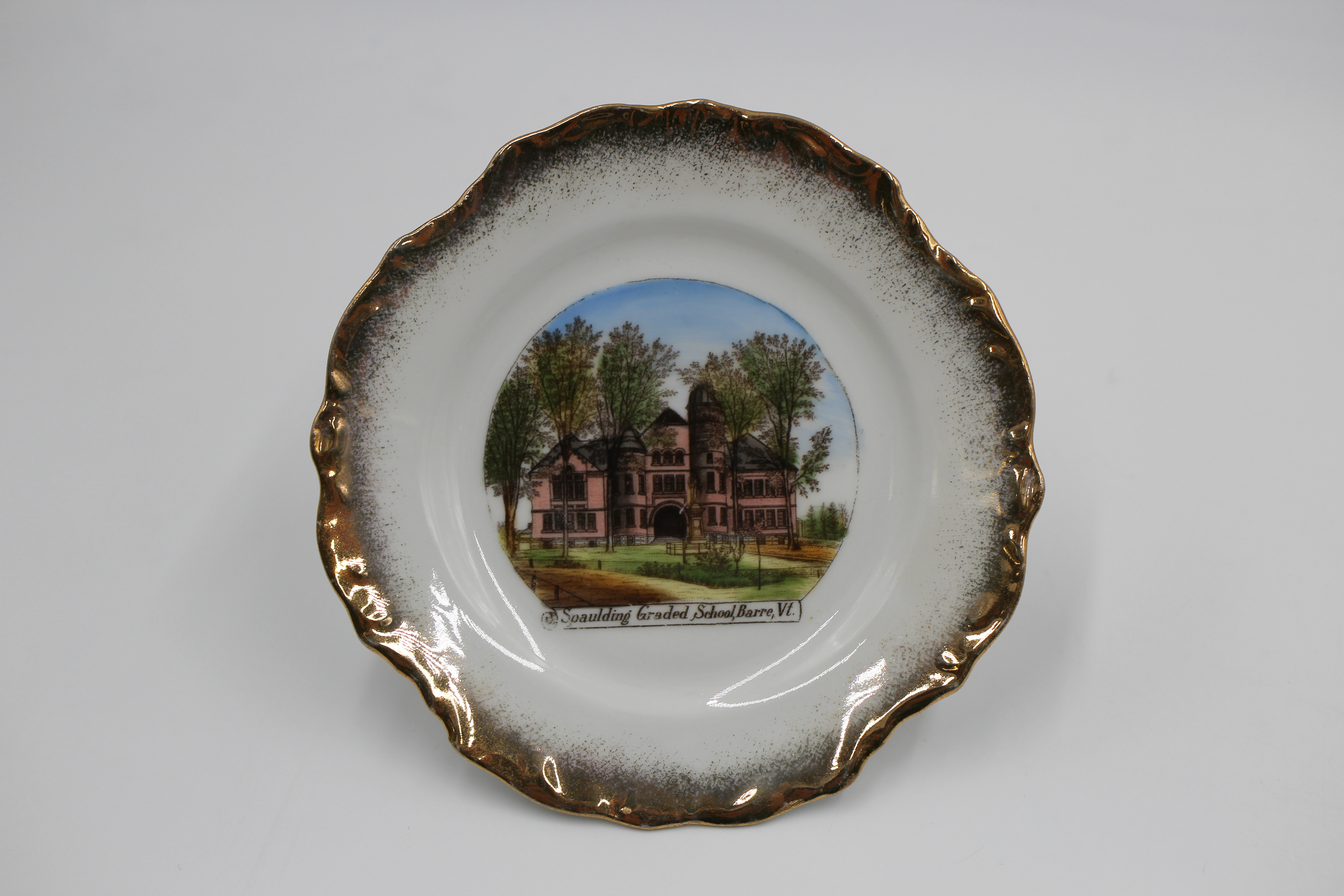
This saucer (2005.21.9) was made between 1910 and 1930 by a German porcelain manufacturer expressly for C.N. Kenyon & Co., a home wares store that was located Barre’s Pearl Street. It features a transfer-decorated illustration of the Spaulding Graded School, complete with the statue of Robert Burns on the sloped lawn in front. This type of commemorative porcelain ware was a popular souvenir in the early 20th century and may have been attractive to alumni visiting after graduation or as a gift to teachers. While we do not know exactly who purchased or used this saucer, it was part of a popular design trend to collect souvenir porcelain while traveling in the early 20th century. The fact that it features the school building demonstrates how important the building was to the Barre community.
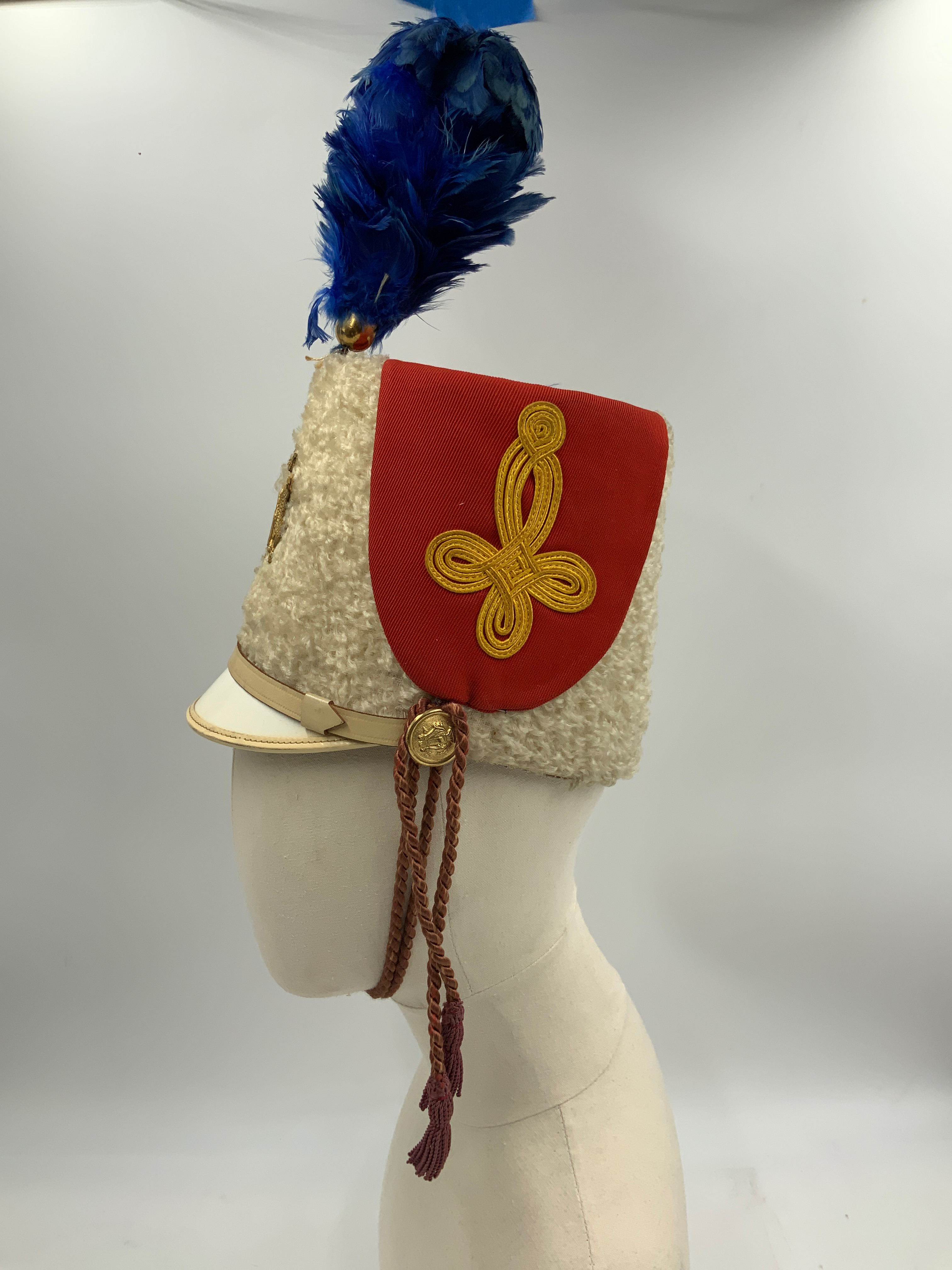
As Barre’s population expanded over the course of the century, the school could no longer hold the entire city’s student population and became the city’s high school. The Spaulding High School became known throughout Vermont for its students’ achievements outside the classroom, including sports and music. This shako (1960.77.1b-c) was proudly worn by several drum majors of the school’s marching band throughout the 1940s. While some uniform components would have been assigned to individual students and kept after graduation, important and more intricate elements like this shako would have been passed down from class to class. VHS received this shako as a donation in 1949, shortly after the school replaced the drum major uniform.
A drum major’s shako has certain features that are similar no matter what the school’s colors or mascot might be—a tall shape, short brim, and feathered plume at the front—but there are unique aspects that identify this one as one belonging to Spaulding. The school’s colors are represented in
the red fabric and gold braid running across the sides and top and contrast with the textured white surface of the hat. The insignia on the front of the United States seal was common for drum major shakos at this time, but the “S.H.S.” arched above it is unique to the school.
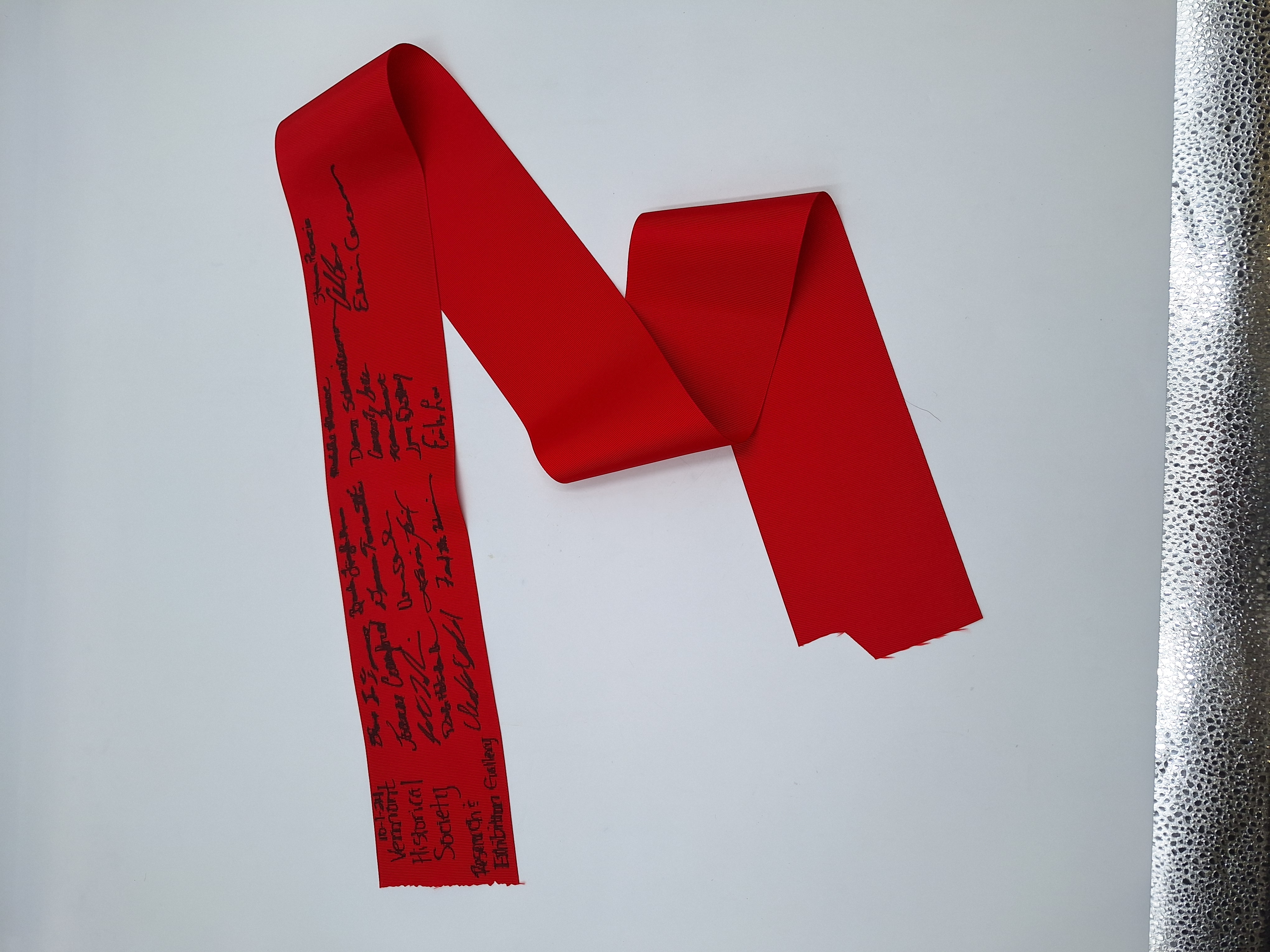
One final piece of this building’s puzzle comes in the form of a signed ribbon fragment (2025.15.1) that dates back to more recent times. When VHS purchased this building, staff and supporters had big dreams for it, one of which came true in 2024 with the opening of the Research & Exhibition Gallery. The space is an open storage gallery that gives in-person and online visitors even better access to our collections and this ribbon was cut in celebration for this new chapter.
While we do not collect our own stories as an organization very often, this ribbon represents the work we do to honor all the people and stories of this state. This stately building that houses our collections and our offices has provided much for the people of Barre, and Vermont, over its 134 years, and we look forward to preserving and sharing much more in the future.
This article was first published in the 2025 Fall / Winter edition of our member magazine, History Connections. If you'd like to get it and support our work, sign up as a member here.