Sorting the unsorted
By Zoe Phillips, 2026 Geiger Fellowship Library Intern
The storage and preservation of information is incredibly important. In the internet age, where new information is constantly produced every second, and search engines continue to degrade, it is especially vital for people to take up the task of compiling and sorting historical documents to make sure it isn't lost forever. This summer I participated in the Vermont Historical Society's Geiger Fellowship Program and met the people who are dedicated to preserving the history of our state, see the processes that go into it, and most importantly, contributed to it myself!
For my main project, I started the process of organizing a large collection of unsorted ephemera that had been bought by VHS a few months ago. The definition of ephemera is fluid between organizations, but the core idea stays the same: transient materials of everyday life, things that are not meant to stand the test of time. The materials in this collection include pamphlets, brochures, tickets, invitations, flyers, business cards, and more.
This collection covers an extensive time period, containing items that date from 1823 all the way to 2016, and the topic range is vast as well, including state tourism, weddings, wars, festivals, town history, disease control, advertising, farm animals, political elections, religious figures, theater programs, and a lot more.
Most of my time was spent getting through the first pass sort, the main goal of which is to pull out any duplicate materials, such as at least five pounds worth of labels for ¨Kendall's Spavin Cure¨ horse medicine. The second sort was narrowing down the categories significantly to sort by specific subject. This process takes a long time, but it feels very rewarding. I am planning to continue working on it over the summer as a VHS volunteer: there is are always more items to sort through.
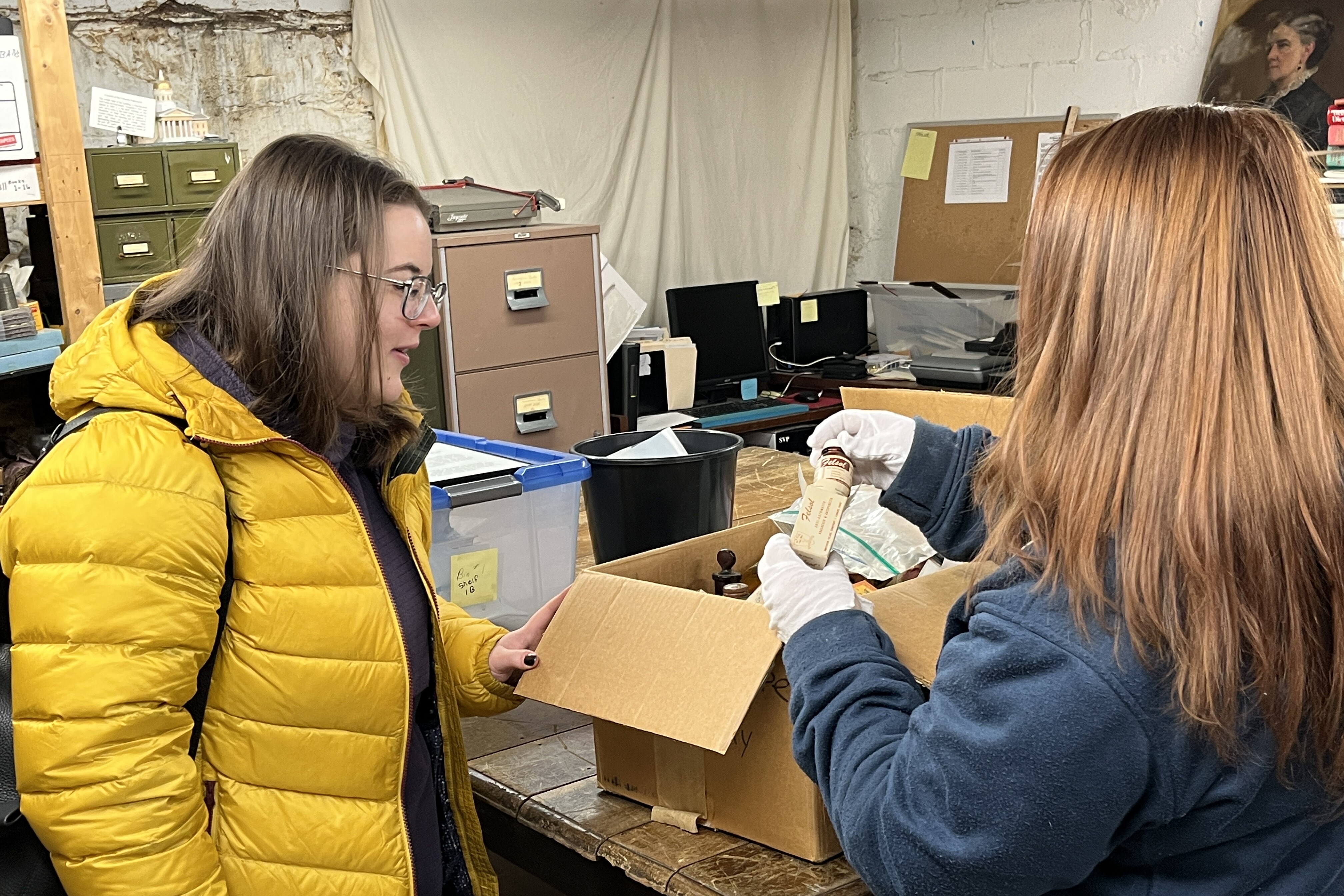
Another part of my fellowship was a tour of the museum object storage space. VHS has a ton of items, and we discussed how deaccessioning items worked, and what items were selected to remain, such as a “recreational syringe kit” from the 1800s. We also looked over a large filing cabinet that was part of the Big Heavy World collection, which had apparently been used as a percussion instrument in the 80s.
The museum and library here are both so amazing, I am very grateful for the work that they do to keep our history alive. Getting the opportunity to be paid for looking at extremely cool historical documents all day was a dream come true for me. Preserving history is a noble art, and I´m glad I had the opportunity to see what it's like to do that as a career. No book or lecture about history can compare to holding it in your hands.