Buffalo Soldiers, Immigration, and the KKK: Teaching Vermont’s Complex History from the Inside
By Ali McFarland, 2026 Geiger Fellow
History has always captivated me. As a child, I could never understand why others did not feel the same. While other students complained about history units or field trips to museums, I eagerly counted down the days. It feels only natural that I chose to major in history, drawn to working in the kinds of places I loved as a kid and inspiring that same enthusiasm in others.
As a senior at the University of Vermont , I jumped at the opportunity to intern with the Vermont Historical Society’s Service & Outreach department this past semester. While there, I worked on three main projects.
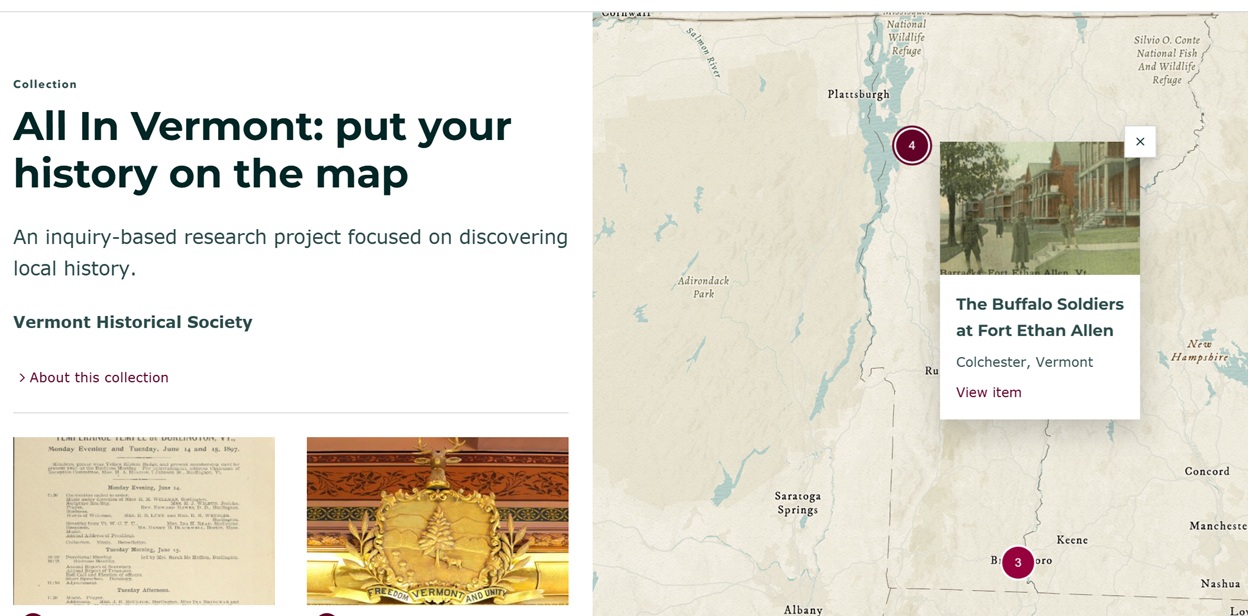
My first project was creating a sample entry for the “All in Vermont: Put Your History on the Map” project, a statewide initiative in which students commemorate America’s and Vermont’s 250th anniversary by researching local history.
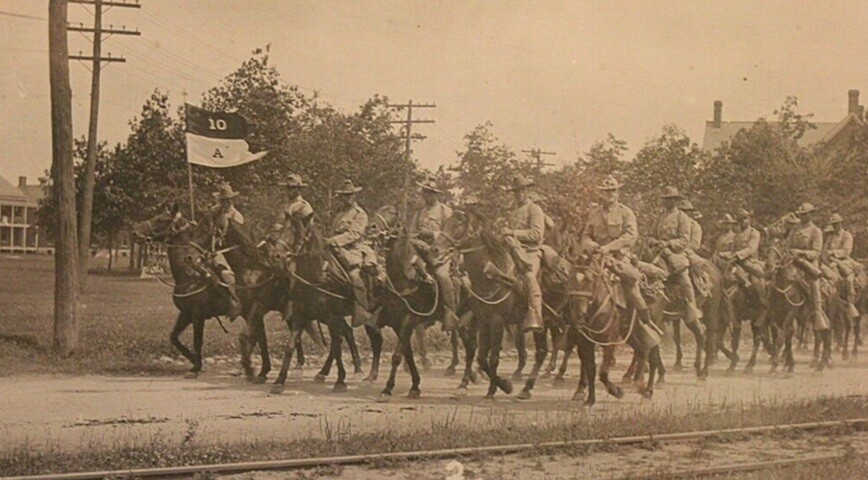
After several days of research in the libraries and archives, I decided to focus on the Buffalo Soldiers who were stationed at Fort Ethan Allen in Colchester from 1909 to 1913. Drawing on postcards, newspapers, and other primary sources, I created an entry that shines light on this often-overlooked part of Vermont history, while situating the state within a broader, national narrative.
Designed as a research example for students across Vermont, this project demonstrates how local history can be used to engage with larger historical themes. I am excited to see the map filled up with student entries in the coming year.
Read more: Buffalo Soldiers on All In Vermont
My next project was developing lesson plans for an educational unit on immigration. While I have experience working with educational materials, this was my first time creating lessons from scratch. The first lesson focused on the Americanization Movement, a topic with a wide range of possible approaches. The Movement was a nationwide effort to assimilate the large wave of immigrants arriving in the United States into mainstream American culture, peaking roughly between 1900 and 1925. Through programs run by schools, employers, settlement houses, and government agencies, it pushed immigrants to learn English, adopt American customs, and demonstrate loyalty to their new country. Progressives of the era believed social problems like poverty, urban slums, and poor education required shaping the composition of the American population. The Movement was driven by a mix of reformers and more nativist voices, making it a complex and contested chapter in American history.
Initially, I found it challenging to locate and select the most effective primary sources, as I had to consider grade level, reading complexity, organization, and how to incorporate Vermont-specific history. Eventually, I gained my footing and helped create a lesson plan that integrates a range of sources, from the reports by the Dillingham Commission, which was established by the Immigration Act of 1907 and named after its chairman, Republican Senator William P. Dillingham of Vermont, to letters written by immigrants themselves. This process strengthened my ability to think critically about how historical content is presented to students.*
I also worked on another lesson centered on the Ku Klux Klan. When I first visited the Vermont History Museum, the exhibit that left the strongest impression on me featured a Ku Klux Klan hood from Vermont. We originally planned to focus broadly on the KKK in Vermont, asking students to explore who was targeted and how communities responded.
However, as our research developed, the focus shifted to the women of the Ku Klux Klan. This was a completely new topic for me, and I was struck by the extent to which women organized and participated in their own branch of the movement. Working with a variety of sources, the resulting lesson plan maintains a Vermont connection through photographs and newspaper articles from the state while encouraging students to engage with less familiar narratives of the state’s past.
These lessons will be available on the Vermont History Explorer website as part of a larger Immigration Unit later this fall.
My last task as an intern was serving as a judge at this year’s Vermont History Day in April. It was a rewarding experience. The projects I evaluated were outstanding, and I was especially impressed by the students’ knowledge and interview skills. I learned so much from their research, and many shared that this was their first major history project. As my own academic journey in history comes to an end, it was inspiring (and a bit emotional) to see other students just beginning theirs.
I am so grateful to have had the opportunity to deepen my understanding of the state’s history while supporting the VHS’s mission to make history more accessible, especially for Vermont students.
*Access to the Dillingham Commission Reports is available from the Library of Harvard University via the Internet Archive here.
Ali McFarland was a Spring 2026 Geiger Fellow at VHS working with the Service and Outreach team. She graduated from the University of Vermont in May 2026.
The Geiger Fellowships are generously supported by the Harvey & Pamela Geiger Charitable Fund. Learn more about future opportunities here.