What Does it Mean to Know What You Have?
By Hannah Kirkpatrick
May 5, 2026
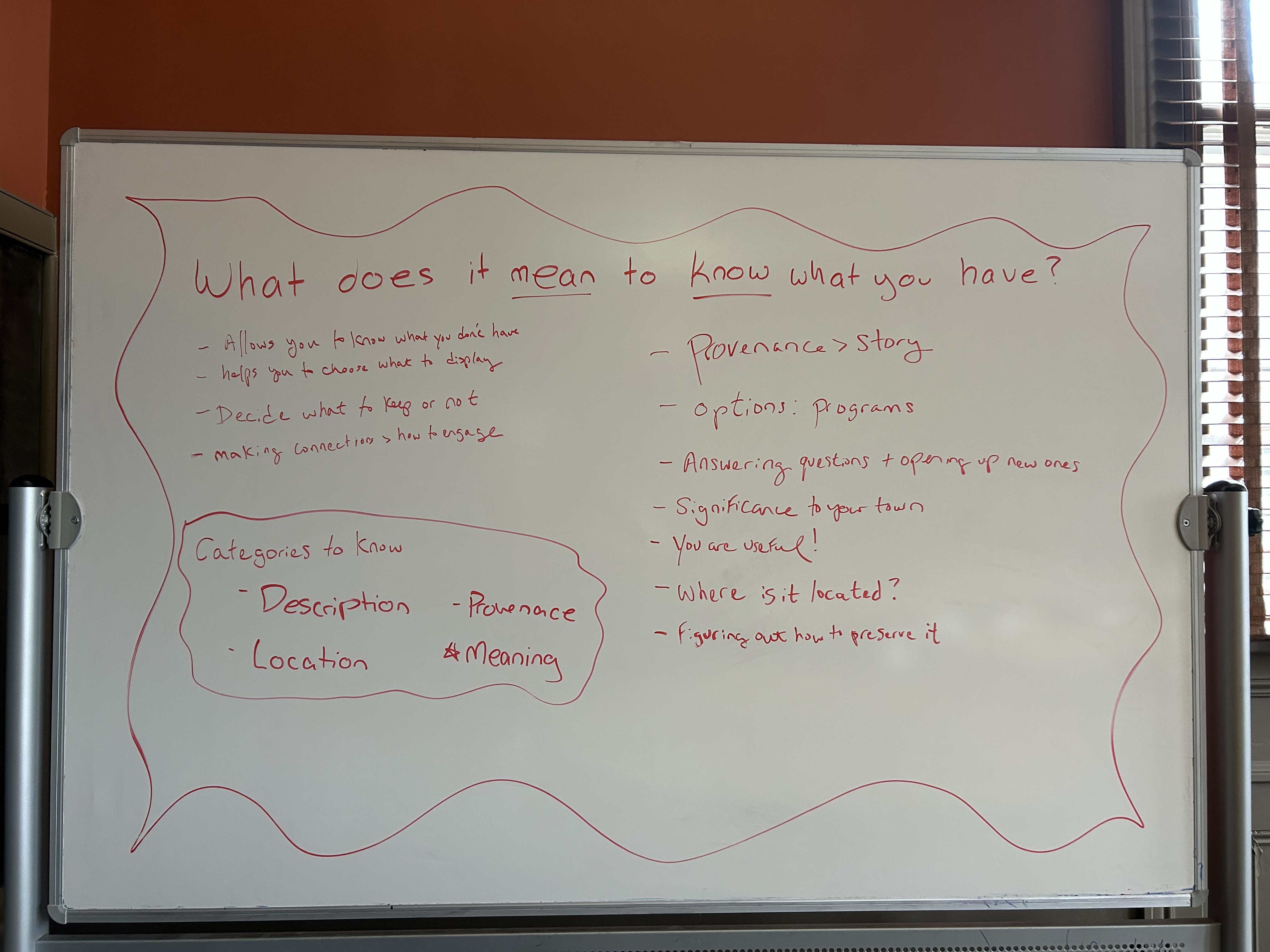
Last Thursday, the Activating 21st Century Local History Training Program’s second cohort met in person for the first time. We gathered at the Vermont History Center in Barre for a workshop on Making Meaning from Collection Data. Topics throughout the day included writing collection management policies and catalog protocols, managing volunteers in museum and archival collections, and interpreting collection data for various audiences.
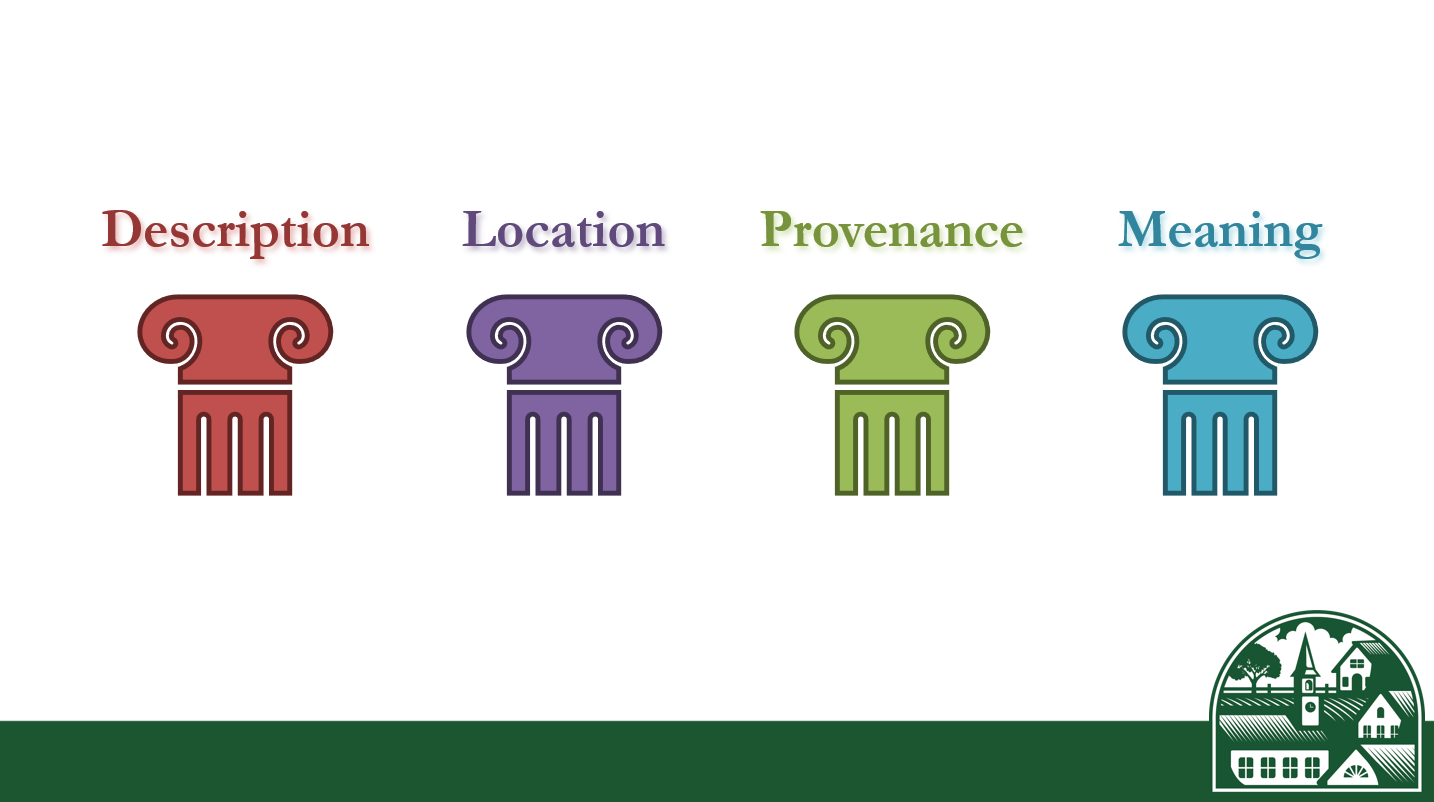
The day started with a discussion of the question, “What does it mean to know what you have?” Our cohort members are about to start their summer Active Collections projects, seeking to better understand what objects they have, who they came from, where they’re stored, and what stories the objects can tell.
Description, location, provenance, and meaning are crucial to meeting the main goal of Active Collections: every object in your collection must support the mission. If you are missing the object’s description, storage location, provenance, or meaning, how can you possibly know what that object is or why you have it? It’s extremely difficult to share the meaning of your objects with your community if you are missing the other three pillars of knowing what you have; if an object is separated from this information, it loses its connection to your mission.
This is why so much of our work in the Activating 21st Century Local History Training Program focuses on building achievable, sustainable systems for recording knowledge about local history collections. As presenters Patricia Reid and Devyn Cabral of the Lake Champlain Maritime Museum said of creating cataloging protocols, “It’s always better to do something than nothing.” Active Collections encourages us, as stewards of history, to be efficient and intentional as we care for the most meaningful objects in our collections.